SPLC Scandal Explodes: Former CFO Faces Federal Fraud Charges Over Alleged $1 Million Informant Scheme
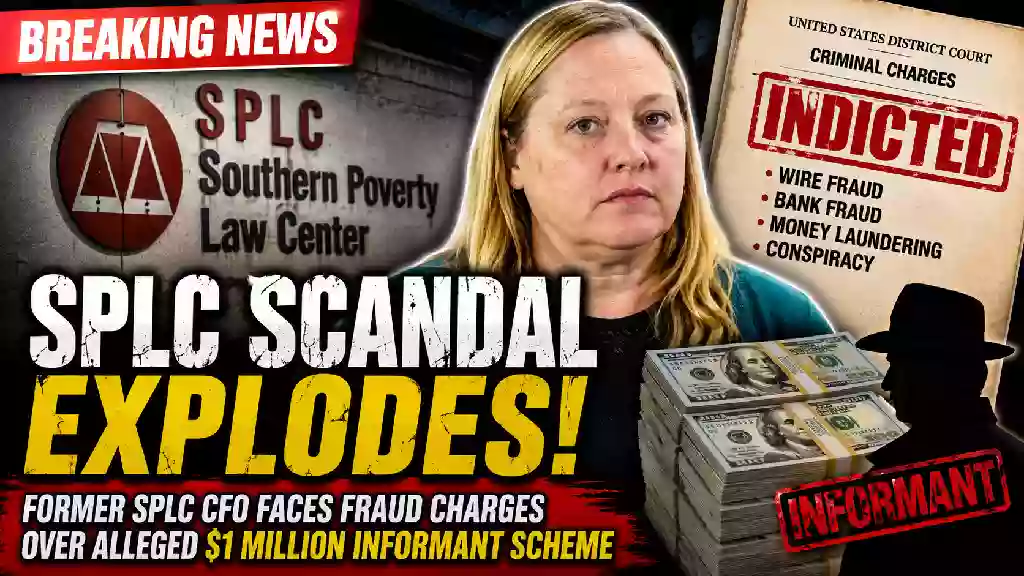
A former Southern Poverty Law Center executive faces federal fraud charges over an alleged $1 million informant payment scheme, according to the allegations described in the case.
SPLC Scandal Explodes: Former CFO Faces Federal Fraud Charges Over Alleged $1 Million Informant Scheme
Former SPLC CFO Charged in Alleged Informant Payment Fraud Case
A former chief financial officer of the Southern Poverty Law Center (SPLC) is facing federal criminal charges over allegations involving more than $1 million in organizational funds that prosecutors say were directed to informants connected to a white supremacist group.
The case centers on allegations of concealed financial transactions, shell companies and a personal relationship involving one of the individuals described as an informant. The allegations have placed renewed attention on the financial practices of nonprofit organizations and the use of paid informants in investigations of extremist groups.
Former SPLC Executive Faces Serious Fraud Charges
According to the source material, the former SPLC CFO is accused of helping route substantial amounts of money to individuals inside a white supremacist organization.
Prosecutors allege that some of the money was concealed through shell companies before reaching an informant who was reportedly in a personal relationship with the former official. The source also alleges that the two shared a bank account.
The reported charges include wire fraud, bank fraud, money laundering and conspiracy. Those allegations are at the center of the government’s case and are expected to be examined through the court proceedings.
Prosecutors Challenge the Purpose of the Payments
The allegations raise questions about whether the payments were legitimate expenses associated with gathering information from extremist organizations or whether the money was improperly handled.
The prosecution’s theory, as presented in the source material, is that funds from the organization were ultimately reaching people associated with the extremist groups that the SPLC was supposed to be investigating and combating.
However, that remains the government’s allegation. Prosecutors will have to establish their case with evidence in court.
The alleged use of shell companies and accounts shared with an informant could become an important issue as the case develops.
Defense Says Charges Are Politically Motivated
The defense has rejected the allegations and characterized the prosecution as politically motivated.
The attorney representing Heidi Beirich said she appeared in court voluntarily and intends to fight the charges. The defense also highlighted Beirich’s history of working against the Ku Klux Klan, neo-Nazi organizations and other extremist groups.
The defense position is expected to focus on the nature of the payments and whether they were connected to legitimate efforts to infiltrate and investigate extremist organizations.
Beirich, like any criminal defendant, is presumed innocent unless prosecutors prove the charges in court.
SPLC Defends Its Fight Against Extremism
The Southern Poverty Law Center has also responded to the federal action by defending its broader mission.
The organization said combating violent hate and extremist groups remains important work and stated that the DOJ action would not change its commitment to its mission. The SPLC also said it looked forward to presenting evidence and making its case in court.
The response highlights the broader implications of the case for an organization known for monitoring extremist movements and documenting hate groups.
Financial Transactions Could Become Central to the Case
As the legal proceedings continue, financial records and evidence surrounding the alleged shell companies could become critical.
Prosecutors will need to establish that the transactions constituted fraud and that the defendant knowingly participated in an unlawful scheme. The defense, meanwhile, can challenge the government’s interpretation of the financial arrangements and argue that payments to informants were connected to legitimate investigative work.
The reported personal relationship between the former official and an informant could also receive scrutiny as prosecutors and defense attorneys examine the circumstances surrounding the transactions.
What Happens Next?
The case is now set to play out through the federal court system, where prosecutors will have to support their allegations with evidence.
The charges are significant, but they are not a finding of guilt. The defendant remains entitled to the presumption of innocence throughout the proceedings.
The case could nevertheless have broader implications for discussions surrounding nonprofit financial oversight, extremist-group investigations, paid informants and federal fraud enforcement.
For the SPLC, the proceedings also present a reputational challenge as the organization continues to defend its mission of confronting violent hate and extremist groups.
Ultimately, the court proceedings will determine whether the government’s allegations can be proven and what consequences, if any, will follow.
#SPLC #SouthernPovertyLawCenter #HeidiBeirich #FraudCharges #DOJ #DepartmentOfJustice #WireFraud #BankFraud #MoneyLaundering #WhiteSupremacy