New Jersey Voter Rolls Under Scrutiny After More Than 6000 Noncitizens Identified
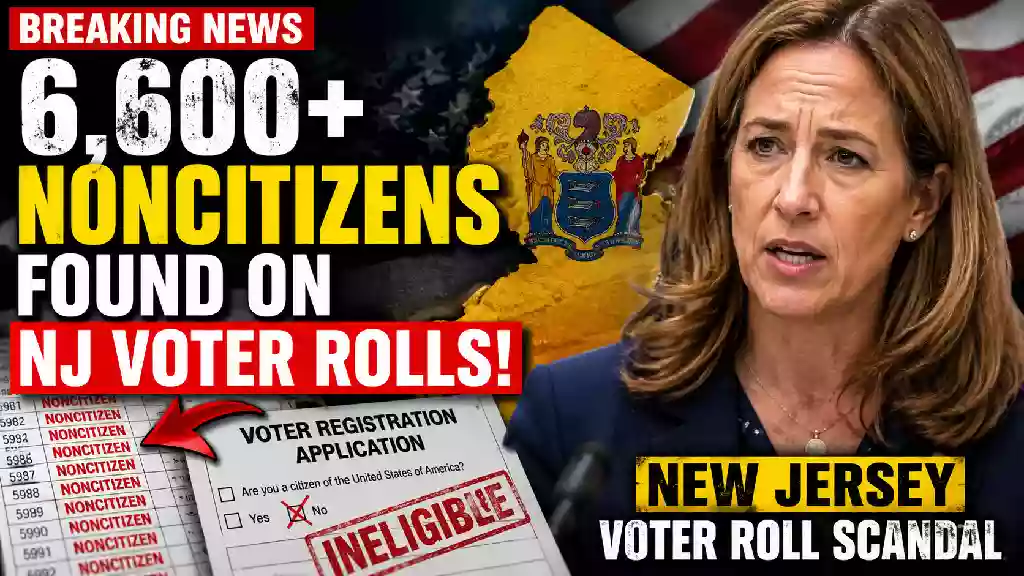
Illustrative political image representing the New Jersey voter registration controversy and growing debate over election integrity and voter verification.
New Jersey Voter Rolls Under Scrutiny After More Than 6000 Noncitizens Identified
Voter Registration Discrepancy Raises Fresh Questions About Election Integrity in New Jersey
A voter registration controversy in New Jersey is drawing renewed attention to election integrity after state officials acknowledged that more than 6,000 noncitizens were added to the state’s voter rolls during 2023 and 2024. Officials have attributed the discrepancy to a software error, but the revelation has prompted Republican lawmakers to demand a closer examination of how the registrations occurred and whether existing safeguards are sufficient.
The issue has become part of a broader national debate over voter registration systems, citizenship verification and election security. While the discovery has raised serious questions, the available information does not establish that every registration was intentional or that every individual identified improperly cast a ballot.
State Officials Blame Software Error
According to the source material, New Jersey Governor Mikie Sherrill acknowledged that more than 6,000 noncitizens were added to the state’s voter rolls in 2023 and 2024. The discrepancy was attributed to a software error.
The admission has nevertheless triggered demands for additional information from Republican members of Congress. The lawmakers are seeking answers about how the problem developed, how voter records are reviewed and what measures are being taken to prevent similar errors from occurring again.
The controversy has placed renewed scrutiny on the technology and procedures states use to maintain voter registration databases.
Questions Raised Over Ballots Cast
The debate became more significant following a claim that roughly 400 of the individuals identified as noncitizens actually voted in elections.
That allegation has become a central point in calls for an investigation. Congressman Brian Stile argued that U.S. elections should be limited to eligible citizens and said lawmakers need to determine exactly what went wrong in New Jersey.
The source material describes two potential areas of concern: the software issue that allowed noncitizens to appear on voter rolls and the broader procedures used to identify and remove potentially ineligible registrations.
However, the information provided does not establish that the approximately 400 votes were the result of intentional voter fraud. That distinction is important when reporting on the controversy.
Driver’s License Rules Become Part of Debate
The controversy has also drawn attention to federal voter registration requirements connected to driver’s licenses.
Under the system discussed in the source material, individuals applying for driver’s licenses can receive voter registration materials. Congressman Stile argued that this creates an additional challenge in states such as New Jersey, where driver’s licenses are available to immigrants who are not U.S. citizens.
His position is that noncitizens should not automatically receive voter registration materials when obtaining a driver’s license because they are not eligible to vote in federal elections.
He called for changes to federal law to address what he described as a gap in the current system.
Republicans Push for SAVE Act
The New Jersey controversy has also renewed Republican calls for passage of the SAVE Act, legislation supporters say would strengthen voter eligibility safeguards through citizenship verification and identification requirements.
Stile specifically cited photo identification and citizenship verification as measures that could strengthen election administration.
The Senate did not pass the legislation before leaving for its August recess, meaning the measure faces another political test when lawmakers return to Washington.
Supporters argue that stronger verification requirements are necessary to protect confidence in the electoral system, while the broader debate over election rules remains politically contentious.
Election Integrity Takes Center Stage
The controversy in New Jersey arrives as election integrity remains a major issue heading toward the midterm elections.
For Republicans, the discovery of thousands of noncitizens on voter registration records is evidence that states need stronger safeguards and more reliable verification systems. For election administrators, the incident underscores the importance of accurate databases, effective software and regular voter-roll maintenance.
The immediate questions are how the discrepancy occurred, why it was not detected sooner, how many records were ultimately affected and whether any votes cast by ineligible voters can be identified and addressed.
The source material supports the existence of the reported registration discrepancy, the software-error explanation and the claim that roughly 400 noncitizens voted. It does not, however, establish that all 6,000-plus registrations were fraudulent or that the individuals involved knowingly violated election laws.
As lawmakers push for additional information and possible legislative changes, the New Jersey case is likely to remain part of the national conversation over voter registration, citizenship verification and election integrity.
#NewJersey #NewJerseyPolitics #VoterRolls #ElectionIntegrity #ElectionSecurity #VoterRegistration #Noncitizens #CitizenshipVerification #VoterID #SAVEAct #ElectionNews